Why Ford Is the Right Company for a Modern Thunderbird Concept
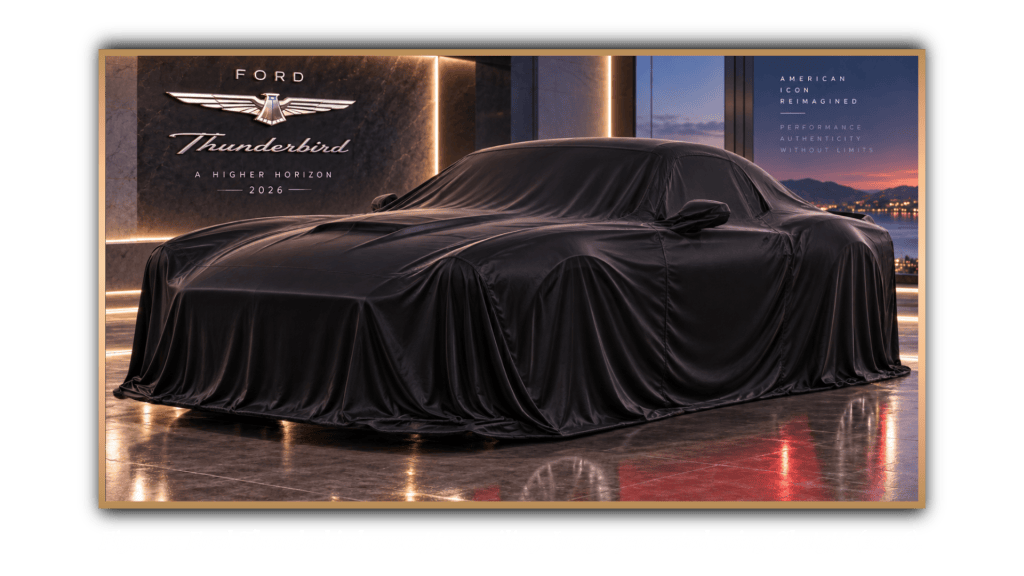
Ford Motor Company, founded in 1903 by Henry Ford, has grown into one of the most influential automotive manufacturers in the world¹. Today, Ford remains the second best‑selling automotive brand in the United States, generating roughly 68% of its revenue domestically and maintaining a strong presence in trucks, SUVs, and performance vehicles². I selected Ford for this project because of its deep heritage in American performance culture and my personal familiarity with the brand. Growing up around Mustangs—and regularly driving my father’s Corvette—I have always noticed the gap in Ford’s lineup: the absence of a true competitor to the Chevrolet Corvette.
Ford’s Reputation and Public Expectations
Ford’s reputation is built on safety, reliability, and American automotive heritage. According to Mintel’s 2026 consumer perception survey, U.S. adults most commonly associate Ford with being safe (33%), reliable (31%), affordable (31%), and high‑quality (26%) ³. Consumer satisfaction scores have remained consistently strong, and the Ford F‑Series continues to dominate U.S. sales with over 828,000 units sold in 2025⁴. The public expects Ford to deliver durable, capable vehicles with recognizable design identity and modern engineering—expectations reinforced by the successful revival of the Bronco⁵.
Unmet Needs and Target Audience
The unmet need addressed by this concept lies within a specific segment: adults aged 30–64 who value performance, nostalgia, and premium American automotive design. Ford ownership is highest among consumers aged 50–64 (16%) and remains strong among those aged 30–49 (11%) ⁴. These buyers appreciate heritage models and are motivated by both emotional appeal and functional performance. Yet Ford lacks a refined, luxury‑leaning sports coupe positioned above the Mustang. Competitors such as the Corvette, Supra, BMW Z4, and Porsche 718 meet some of these needs, but none offer a premium American sports car that blends nostalgia with modern engineering.
The New Product Concept: A Modern Ford Thunderbird
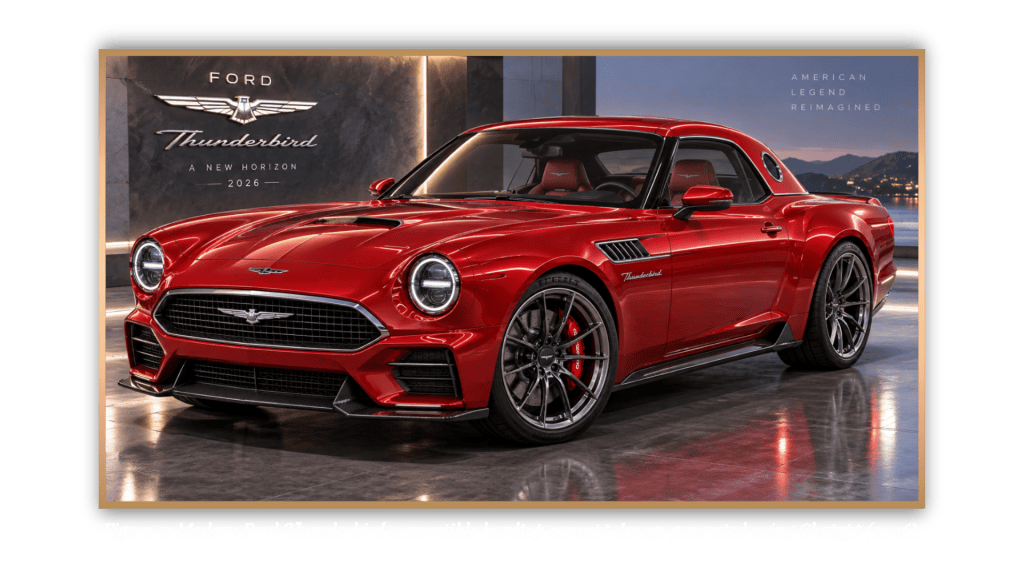
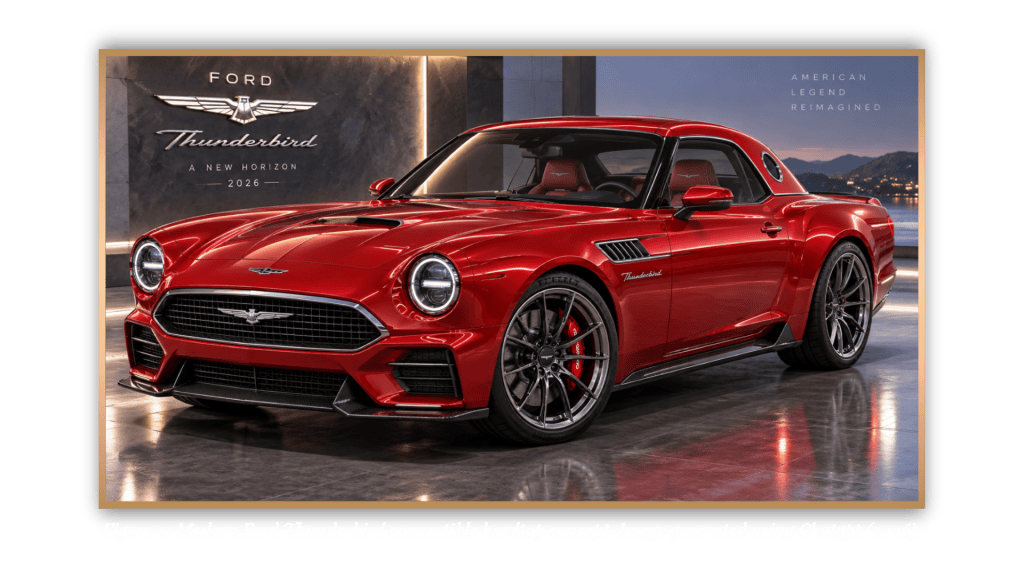
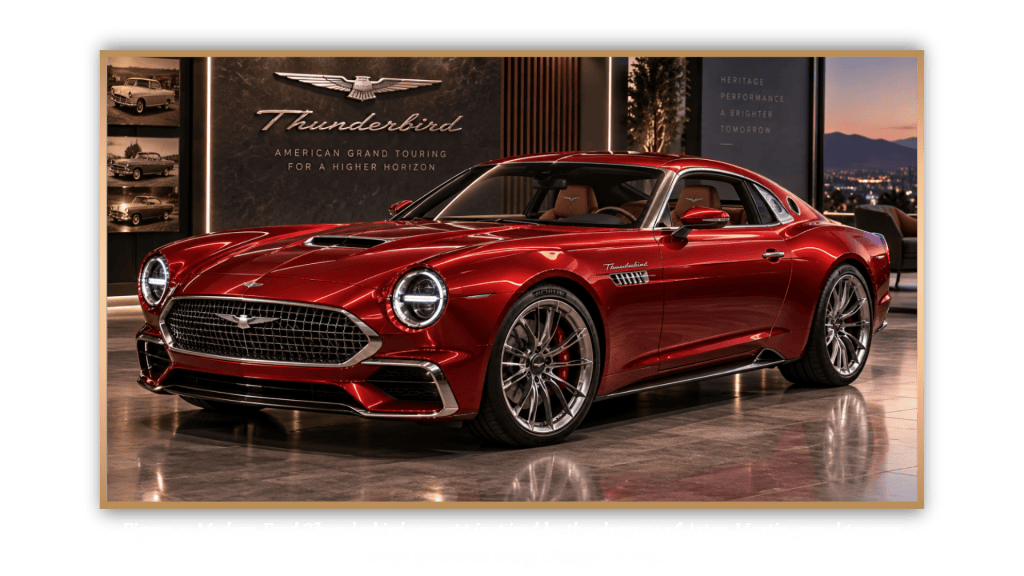
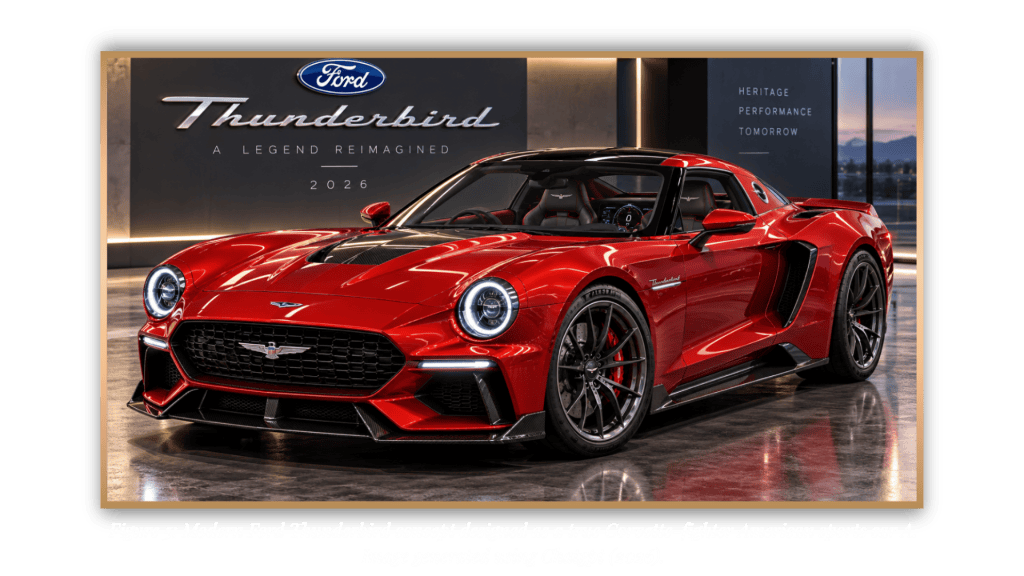
The proposed product concept is a modern revival of the Ford Thunderbird—reimagined as a two‑door performance sports coupe. Inspired by the original 1955–57 model, the new Thunderbird would feature a long hood, short rear deck, wide stance, and round LED headlights. Key features include a lightweight aluminum body, rear‑wheel drive, a twin‑turbo V6 engine, and an optional hybrid performance powertrain. Inside, the Thunderbird would offer a luxury‑focused cabin with leather seating, retro‑inspired vents, and Ford’s latest SYNC technology. Functionally, it delivers modern performance and advanced technology; emotionally, it taps into nostalgia and offers a unique identity distinct from the Mustang.
Research Design and Objectives
To evaluate the viability of this concept, the research design will use a mixed‑method approach. Quantitative research will include online surveys targeting adults aged 30–64 who have purchased or considered a sports car within the past five years. Qualitative research—through focus groups and interviews—will explore emotional reactions to heritage‑inspired design and comparisons to competitors. Secondary research will provide context on market trends and competitive dynamics⁶.
Objectives:
- Measure interest in a modern, heritage‑inspired Thunderbird.
- Identify desired performance, design, and technology features.
- Evaluate perceptions of Ford as a performance brand.
- Assess interest in hybrid performance powertrains.
- Understand competitive comparisons and unmet needs.
Conclusion
Early indicators suggest strong interest in heritage‑inspired performance vehicles, and Ford’s brand identity positions it well to deliver a modern Thunderbird that blends nostalgia with innovation. If research supports this direction, the Thunderbird could fill a long‑standing gap in Ford’s lineup and offer a compelling new entry in the American sports car landscape.
References
¹ Ford Motor Company. (2019, August 28). Life of Henry Ford: Articles: Ford Motor Company. Ford Corporate. https://corporate.ford.com/articles/history/henry-ford-biography/?intcmp=corp-history-cta-articles-henryford
² Dun & Bradstreet, Inc. (n.d.). Ford motor Company. D&B Hoover. https://app.hoovers.dnb.com/company/033368bb-ca80-3308-87d9-26099cd97012/report/company_summary
³ Sanchez, G. (2026, February 28). US perceptions of auto brands: 2026. Mintel. https://store.mintel.com/report/us-perceptions-of-auto-brands-market-report
⁴ Ford Motor Company in the United States | Statista. (2024). Statista. https://www.statista.com/study/22336/car-brands-ford-statista-dossier/
⁵ Gunn, M. (2026, February 20). Attractive off-road-capable model with familiar name; 2026 Ford Bronco sport. Times Colonist (Victoria, British Columbia). https://advance.lexis.com/api/document?collection=news&id=urn%3acontentItem%3a6HYB-NRJ3-RV3N-C2C9-00000-00&context=1519360&identityprofileid=54Q9Q854566
⁶ Harrison, J.H.D.O.D. E. (2026). Essentials of Marketing Research (6th ed.). McGraw-Hill Higher Education (US). https://bookshelf.vitalsource.com/books/9781265800833


Leave a Reply